Why Gates and Fences Coating Matters More Than You Think
The Difference Between a Finish That Lasts and One That Fails
If you own a home or run a business in the Houston Bay area, you have seen what happens to outdoor metal when the weather turns against it. Steel gates rust. Aluminum fences pit. Wrought iron railings lose their shine and start flaking within a couple of years. The problem is rarely the metal itself. The problem is almost always the coating - or the lack of a proper one.
I have spent the better part of two decades working with metal finishes, and I can tell you that the difference between a job that holds up for a decade and one that looks terrible after a single summer comes down to preparation and the right material choice. That is where a serious gates and fences coating makes all the difference. It is not about making things look pretty, though that is a nice side effect. It is about stopping corrosion before it starts and keeping your property safe and solid for years.
What Makes Outdoor Metal So Hard to Protect
The climate around Pearland and the broader Houston Bay area puts metal through a punishing cycle. High humidity, sudden rain, intense UV exposure, and salt air from the Gulf all attack bare surfaces. Even galvanised steel, which gets a thin zinc layer during manufacturing, can break down if the coating on top is not compatible or is applied poorly.
I have seen residential gates that were painted with standard hardware-store enamel fail within eighteen months. The paint peeled off in sheets, and rust bloomed underneath like a slow infection. The homeowner had spent a weekend on the project and thought they had saved money. In reality, they had just delayed the real fix and made it more expensive.
A proper coating system for outdoor metal is not a single product. It is a sequence. You start with surface prep, usually sandblasting to remove old paint, mill scale, and any rust that has already formed. Then you apply a primer, often a zinc-rich primer for steel or an epoxy primer for aluminum. After that comes the top coat, which needs to be thick enough to block moisture but flexible enough to handle thermal expansion. And the whole thing needs to cure under controlled conditions, not in open air with dust blowing onto wet paint.
Why Powder Coating Beats Liquid Paint for Gates and Fences
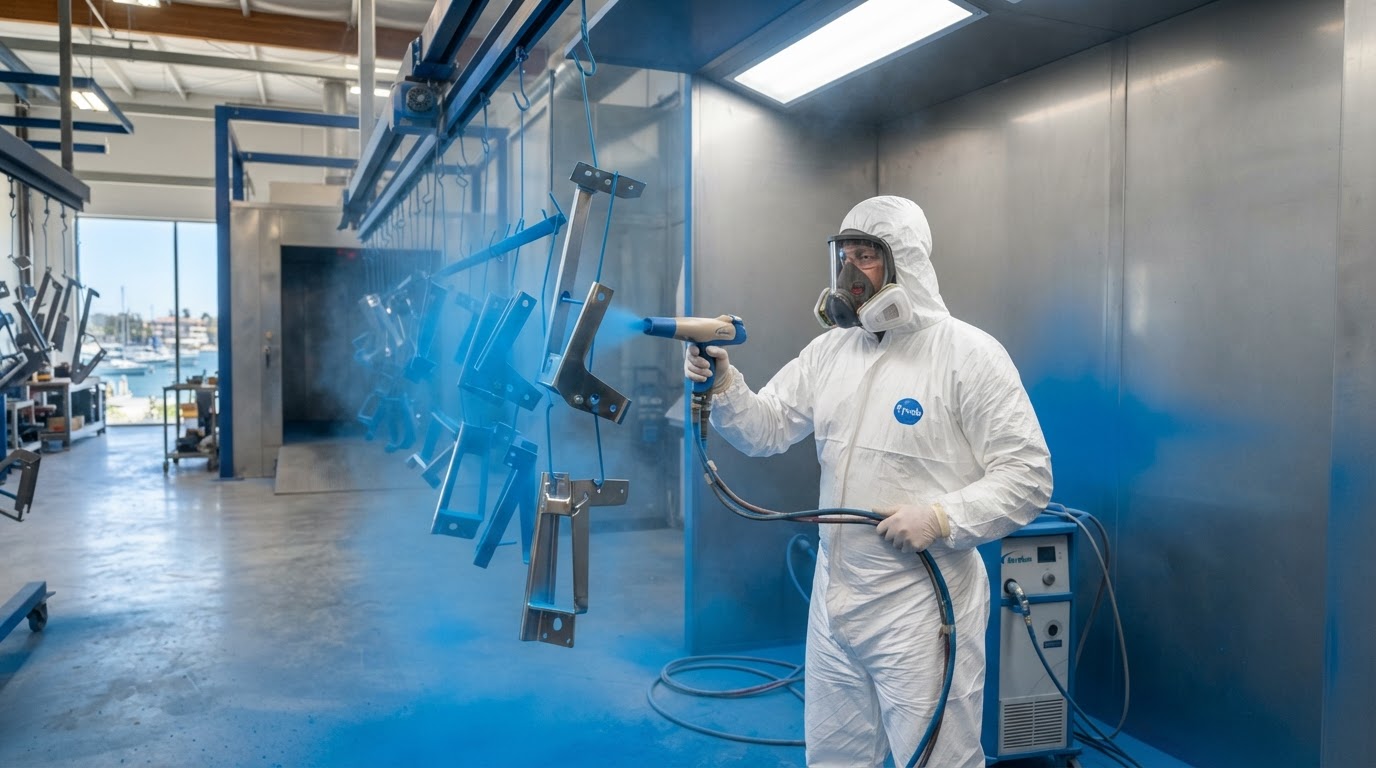
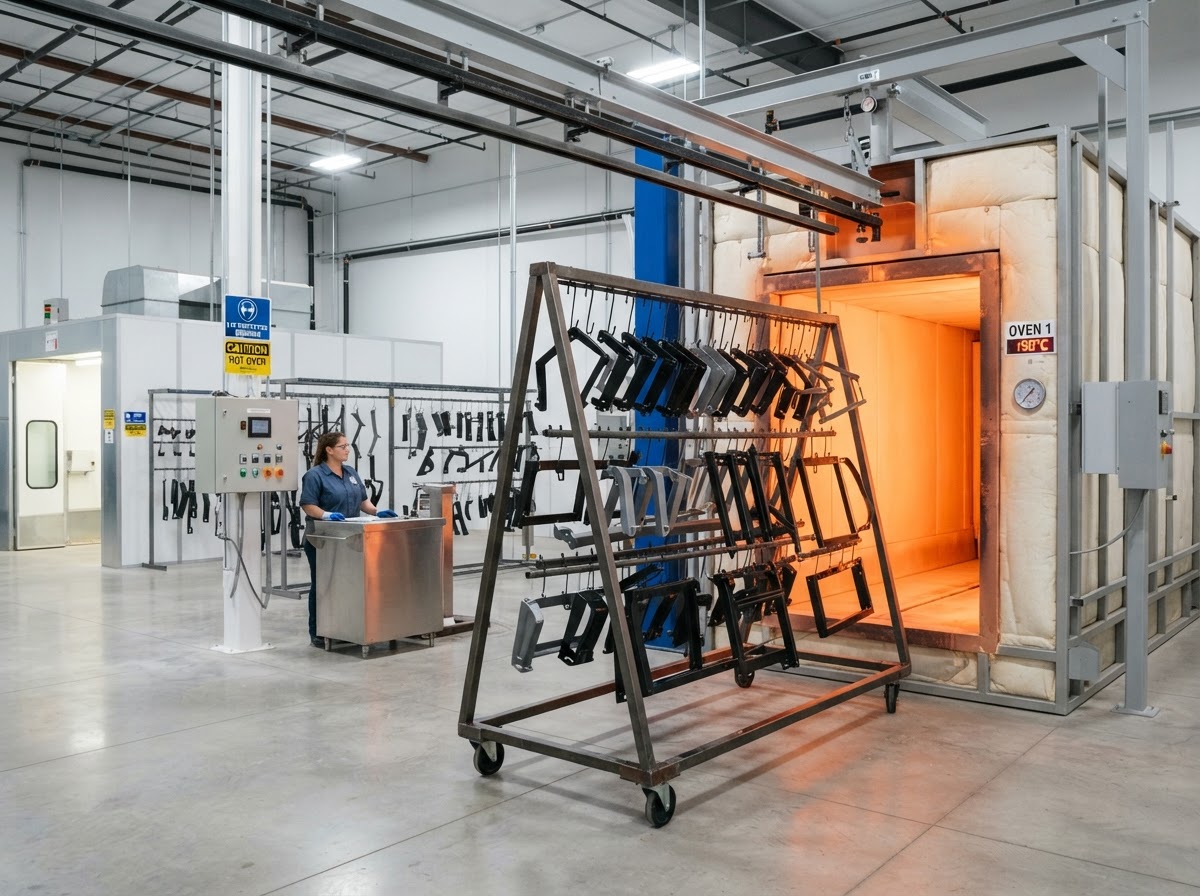
For most outdoor metal projects, powder coating is the better option compared to wet paint. The process uses an electrostatic spray to apply a dry powder to the metal surface. The part then goes into an oven where the powder melts and fuses into a continuous film. There is no solvent evaporation, no runs or sags, and the final thickness is very consistent.
For steel gates, a good powder coat with a UV-resistant top coat can stay glossy and intact for ten years or more. Compare that to brushed-on paint, which usually needs recoatings every two or three years. The upfront cost of powder coating is higher, but the lifecycle cost is lower. You also get better impact resistance. A rock kicked up by a lawnmower will chip paint but often bounces off a well-cured powder coat.
One thing I always tell people is that not all powder coatings are the same. The quality of the finish depends heavily on the shop equipment and the skill of the operator. Cheap shops cut corners on pre-treatment or rush the curing cycle. A proper shop will sandblast the part first, apply an appropriate primer if needed, and then cure the powder coat at the exact temperature the manufacturer specifies. That is the difference between a weatherproof finish and one that fails prematurely.
Matching the Coating to the Metal
Different metals need different approaches. Steel gates, especially heavy ones with welded joints, benefit from a zinc-rich primer under the powder coat. The primer acts as a sacrificial layer. If moisture finds a pinhole in the top coat, the zinc corrodes first instead of the steel. That buys you years of extra life.
Aluminum fences are lighter and do not rust in the way steel does, but they still corrode. Aluminum oxide forms a natural protective layer, but that layer is fragile. A scratch through the oxide can lead to pitting, especially in salty air. An epoxy primer bonds well to aluminum and creates a stable base for the top coat. Without it, the powder coat may lose adhesion over time.
Wrought iron is a different challenge. It is porous and often has complex curves and scrollwork. Sandblasting is essential to get into all the crevices. After that, a thick coating system is needed because wrought iron can trap moisture in its surface texture. I have seen beautiful wrought iron gates that looked perfect from a distance but were rusting from the inside out because the coating never reached the deep recesses.
Galvanised steel is tricky in its own way. The zinc layer that makes it corrosion-resistant also makes it hard for coatings to stick. A special primer, often a wash primer or an etch primer, is needed to create a mechanical bond. Skip that step and the coating will peel within a year.
The Role of Surface Preparation
If there is one thing that separates a professional-quality gates and fences coating from a mediocre one, it is surface preparation. Sandblasting is the gold standard for heavy rust and old paint. It leaves a clean, roughened surface that coatings can grip. For lighter contamination, a chemical clean and a light abrasive blast may be enough.
I have watched shop operators try to save time by skipping the blast and just wiping the metal with solvent. The result is almost always failure. The coating may look good for a month or two, then bubbles appear, then cracks, then rust. The cost of redoing the job is always higher than the cost of doing it right the first time.
For industrial metal projects, sandblasting is often followed by a phosphate rinse to passivate the surface. That step adds a day to the process but dramatically improves adhesion. In the Houston Bay area, where humidity can cause flash rust within hours, the timing between blasting and coating is critical. A good shop schedules the coating immediately after blasting, not the next morning.
Practical Advice for Homeowners and Business Owners
If you are planning a coating project for residential gates, railings, or metal fencing, here are a few things to keep in mind:
- Ask the shop about their pre-treatment process. If they do not mention sandblasting or a thorough chemical clean, be cautious.
- For steel, insist on a zinc-rich primer or a high-quality epoxy primer under the top coat.
- Choose a UV-resistant top coat if the metal will sit in direct sun. Dark colors absorb heat and can cause the coating to soften if it is not formulated for outdoor use.
- Do not mix coating types without checking compatibility. Some powder coats do not bond well to certain liquid primers.
For larger projects like industrial metal projects or commercial fence lines, the stakes are higher. Downtime for recoating can cost thousands of dollars in lost productivity. That is where a professional powder coating service with experience in dip coating and electrostatic spray becomes worth the investment. They can handle the scale and the quality control in ways that a small crew with spray cans cannot.
Automotive Powder Coating Lessons for Gates and Fences
Interestingly, some of the best practices for residential and commercial metal finishes come from automotive powder coating. Car parts undergo extreme conditions - heat, vibration, road salt, UV - and the coatings have to hold up. The same technology that protects a set of wheels or an engine block can protect a steel gate or aluminum fence.
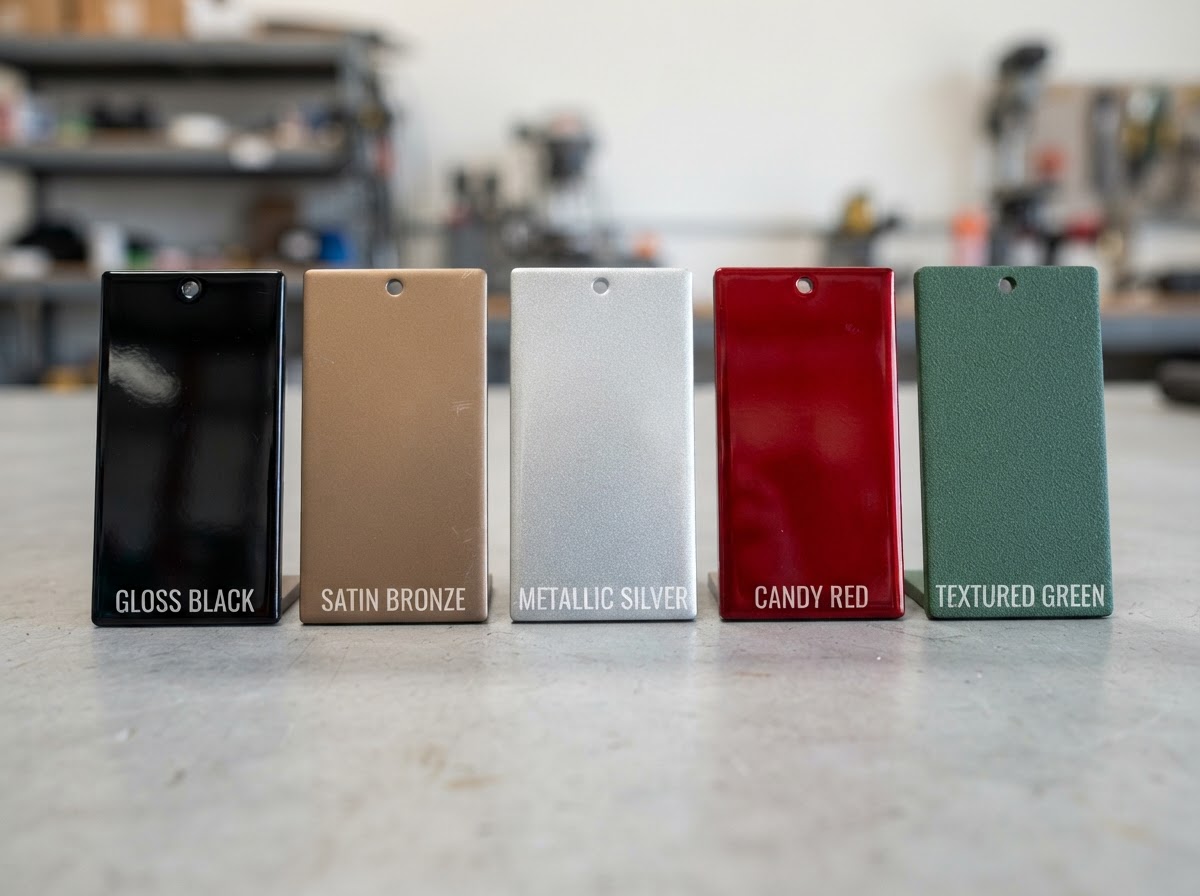
Automotive shops often use a multi-layer system: a phosphate base, an epoxy primer, a color coat, and a clear top coat. That same approach works beautifully for outdoor architectural metal. The clear coat adds UV protection and makes the color last longer. It also makes cleaning easier. A hose-down with water is usually enough to keep the finish looking fresh.
One thing I have noticed is that many homeowners do not realize that they can get automotive-grade durability for their gates and fences. They assume that because a product is sold for cars, it is not meant for home use. But the chemistry is the same. A good powder coat is a good powder coat, whether it goes on a truck frame or a front gate.
Final Thoughts on Long-Term Performance
The best time to think about a coating is before the metal ever goes outside. If you are building a new fence or installing new gates, have them coated before installation. That way the shop can blast and coat every surface, including the backsides and the edges that will face the ground. Once the gate is hung, those hidden areas become almost impossible to protect properly.
For existing metal that is already showing signs of rust, do not just paint over it. The rust will continue to grow under the new paint and push it off. Strip the old finish, treat the rust with a converter or a primer, and then apply a fresh coating system. It is more work upfront, but it is the only way to get a lasting result.
A reliable gates and fences coating is not a luxury. In a climate like the one around Pearland and the Houston Bay area, it is a necessity. The right coating saves you money, time, and frustration. It keeps your property looking good and functioning safely for years. And it all starts with choosing the right shop, the right materials, and the right process.